How to Choose a Neighbourhood in Durham Region
Compare Durham Region neighbourhoods through commute tests, daily routines, school locators and home-by-home trade-offs before building your shortlist.

To choose a Durham Region neighbourhood, compare your ordinary week: test the full commute, explore the surrounding blocks, check address-specific school eligibility and weigh each home’s layout and upkeep alongside its location.
It’s easy to fall for a house before thinking through the neighbourhood around it. The kitchen might be exactly what you wanted, but you’ll also be living with the commute, the school run and the trip out for groceries.
If you are comparing homes in Whitby, Oshawa, Ajax, Pickering or elsewhere in Durham Region, it helps to compare how each location would work during a normal week. Here’s where I’d start.
1. Start with an ordinary week
Before choosing communities, write down the places you travel to regularly: work, groceries, appointments, recreation and the people you visit. Then separate your needs into three groups.
- Essential: requirements you cannot reasonably compromise on.
- Preferred: features that improve daily life but allow some flexibility.
- Optional: things you would enjoy if the rest of the home fits.
Be specific. “Easy commute” is harder to compare than “a manageable door-to-door trip on the days I work downtown.” “More space” might really mean a quiet office, storage for equipment or a bedroom on the main floor.
2. Test the full journey
Try the routes you would use at the times you would use them. For transit, include the walk or drive to the stop or station, waiting time, transfers and the trip home. If your hours vary, check the return journey outside the usual peak period too.
Start with the Durham Region Transit system map and follow its current route and schedule information. Check any connecting services separately. A map is a planning aid; an actual test trip helps you understand the experience.
If you drive, consider driveway access, the routes to your regular destinations and where visitors would park. A home's distance from a highway is only one part of its day-to-day convenience.
3. Look at the surrounding blocks
Walk the immediate area when practical. Notice sidewalks, crossings, lighting, the route to a park and how nearby roads sound from the property. Visit again at a different time. Your own observations are more useful than a broad label applied to an entire town or city.
The Region's official maps page links to tools for exploring parks, trails, recreation, schools and community services. Use these to build a list of places to investigate. If a particular school or program matters to your move, confirm the address's eligibility directly with the relevant school board.
For school catchments, enter the full property address in the DDSB public school locator or DCDSB Catholic school locator. Confirm the school year, grade, program, eligibility and transportation with the board. Then try the school route, including crossings and drop-off arrangements; the nearest school isn’t necessarily the assigned one.
4. Compare the home and location together
A neighbourhood shortlist should leave room for differences between individual properties. Two homes a few streets apart may offer very different layouts, outdoor space and upkeep.
- Does the layout work with your furniture and daily activities?
- Is the outdoor space useful to you, and can you manage its maintenance?
- What storage, parking and accessibility needs must the property meet?
- What condition-related questions need a closer look or professional advice?
- Are there nearby development proposals or road projects you want to investigate?
For that last question, consult the municipality's current planning information and ask about the specific site. Avoid assuming that an open view or vacant lot will stay the same.
5. Keep a simple comparison sheet
After each visit, record five things: the location, your tested travel experience, the home's strongest practical feature, its biggest compromise and the questions still unanswered. Add one sentence: “Living here would make my week easier because...”
For example, one property might offer the office you need but require more driving for errands. Another might simplify your routine while offering less storage. You might happily trade some storage for an easier commute, or feel exactly the opposite. It depends on what you need from the move.
Build a shortlist you can explain
You do not need to choose a favourite neighbourhood before you begin. Start with a few areas and see what you like about each. Your shortlist will usually get clearer once you’ve spent some time in them.
Browse Durham Region property listings, or email Robert about your home search. Tell me what your next home needs to make possible, and we can build a focused list of places to explore.
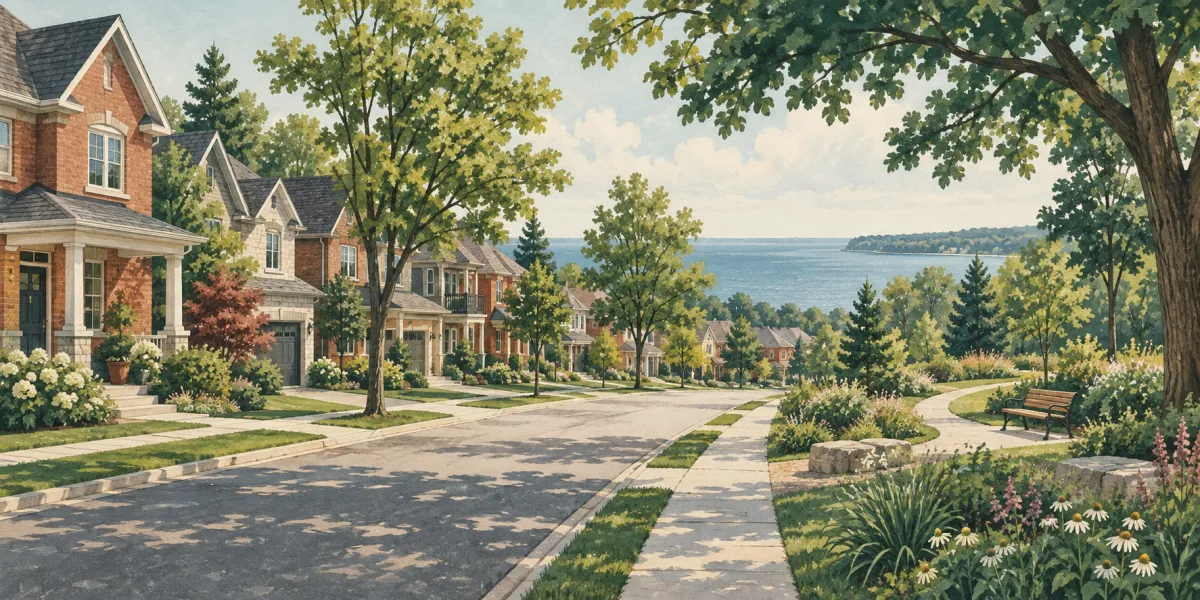
Cover image is a decorative illustration, not a photograph of a specific Durham Region property or location.
Sources checked during migration (November 16, 2026); see source links below.
Sources
New articles by email
When Robert writes something new about your area, it comes to your inbox.
By subscribing you agree to receive emails from Robert Marsiglio when a new article is posted. You can unsubscribe at any time.